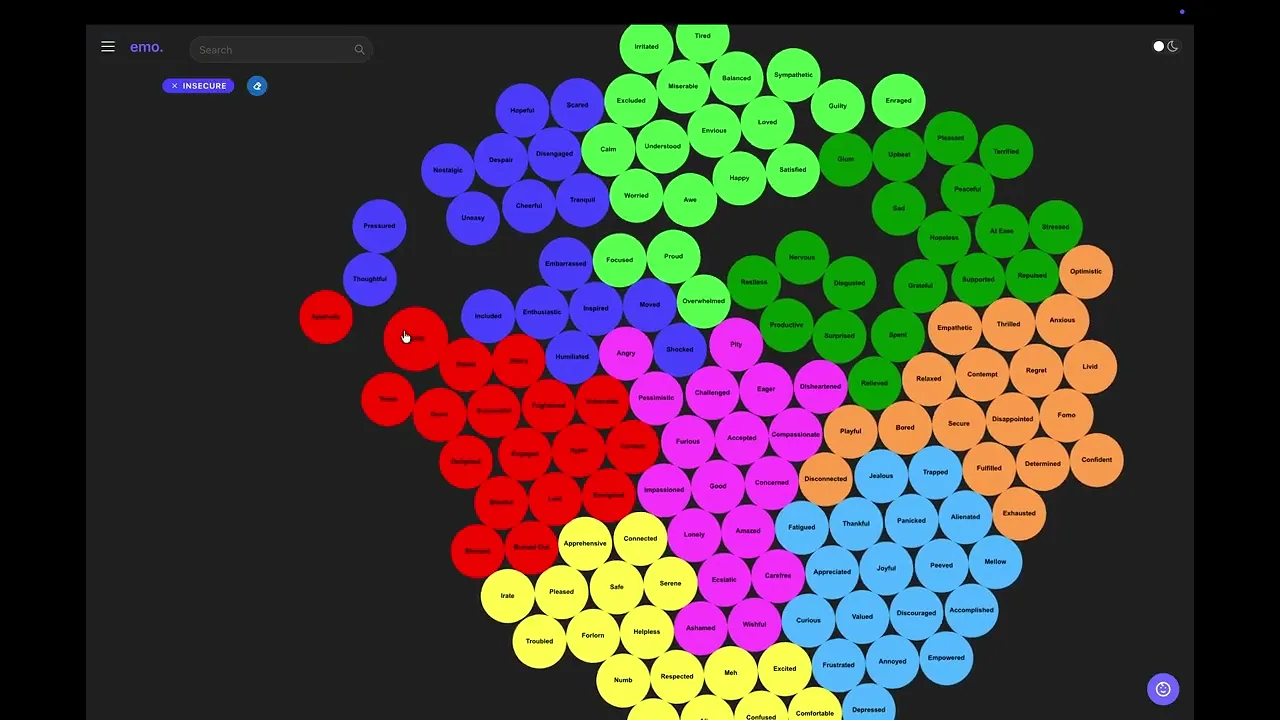
Emo
Building emotional intelligence skills for young adults as stress remains the epidemic of the century.
Duration
Role
Product
Nov 2023 - April 2025, Feb - March 2025 Foundess Accelerator
Founder & Lead Designer
Kimney Nguyen (Design Lead, Founder), Parker Conrad (Technical Lead), Tharani Prabu (Design Intern), Ty Nguyen (Front-end engineer), Michell Johnson (Advisor), Bill Redmon, Ph.D. (Advisor), and Susan Redmon, Ph.D. (Advisor)
Scope
Inspired by my own emotional journey and the research highlighted in Brené Brown's Atlas of the Heart, I wanted to build a solution to help people find emotional terms to deepen their understanding of their needs and improve communication.
In Scope
Product strategy and vision
User research and idea validation
Prototype (proof of concept)
Research analysis and next steps
Investor pitch
Out of Scope
MVP development
Pitch Deck
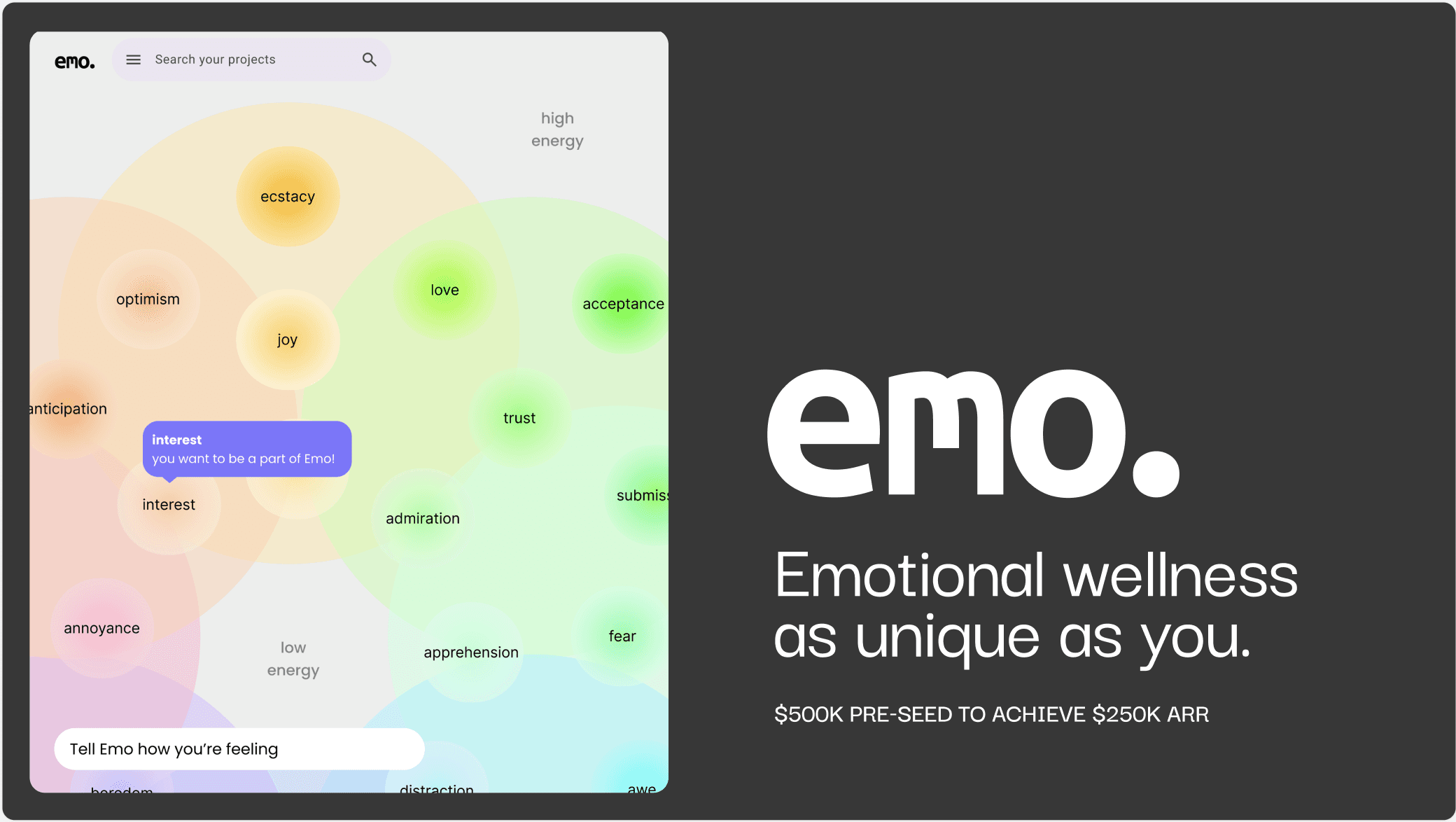
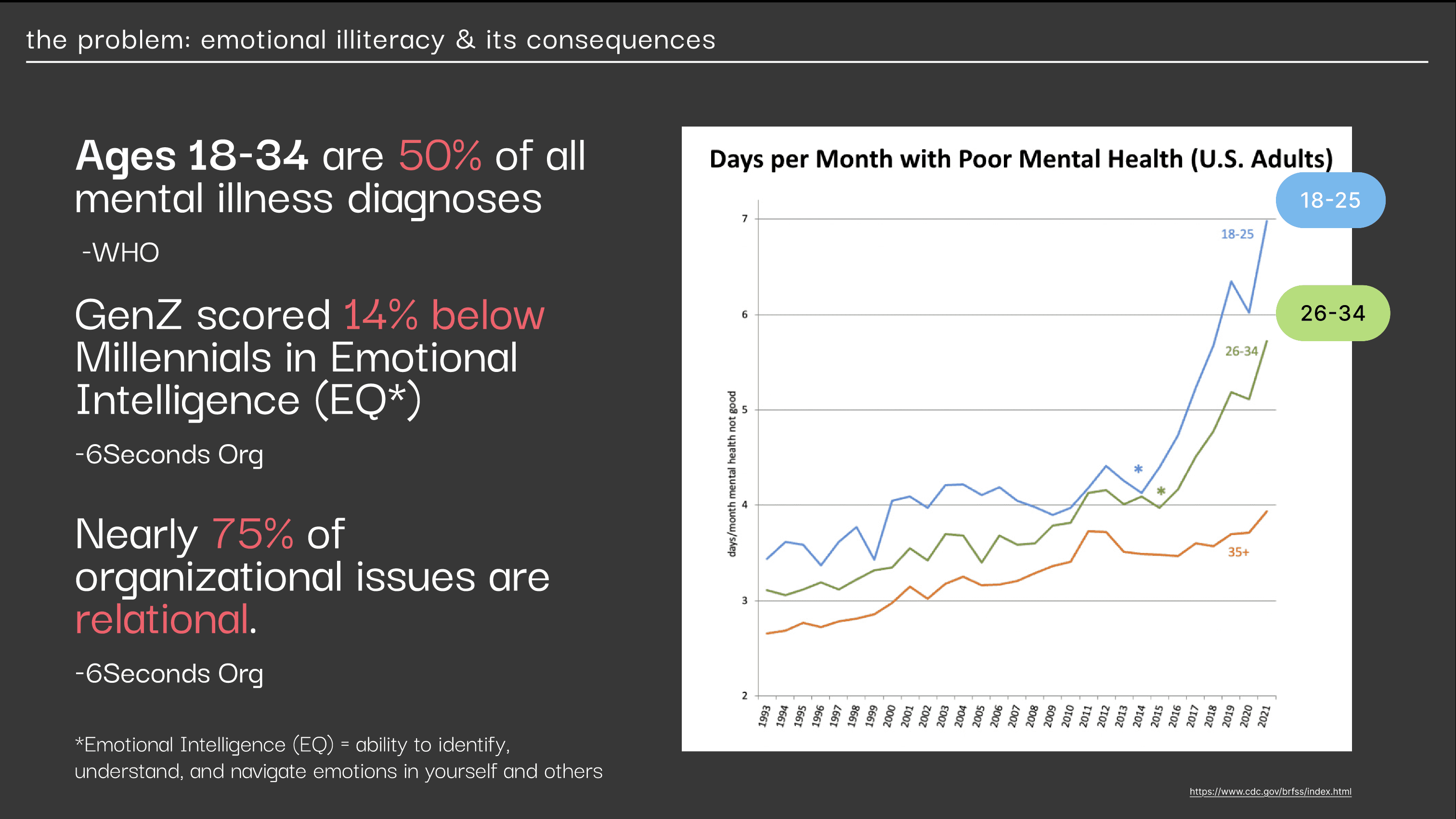
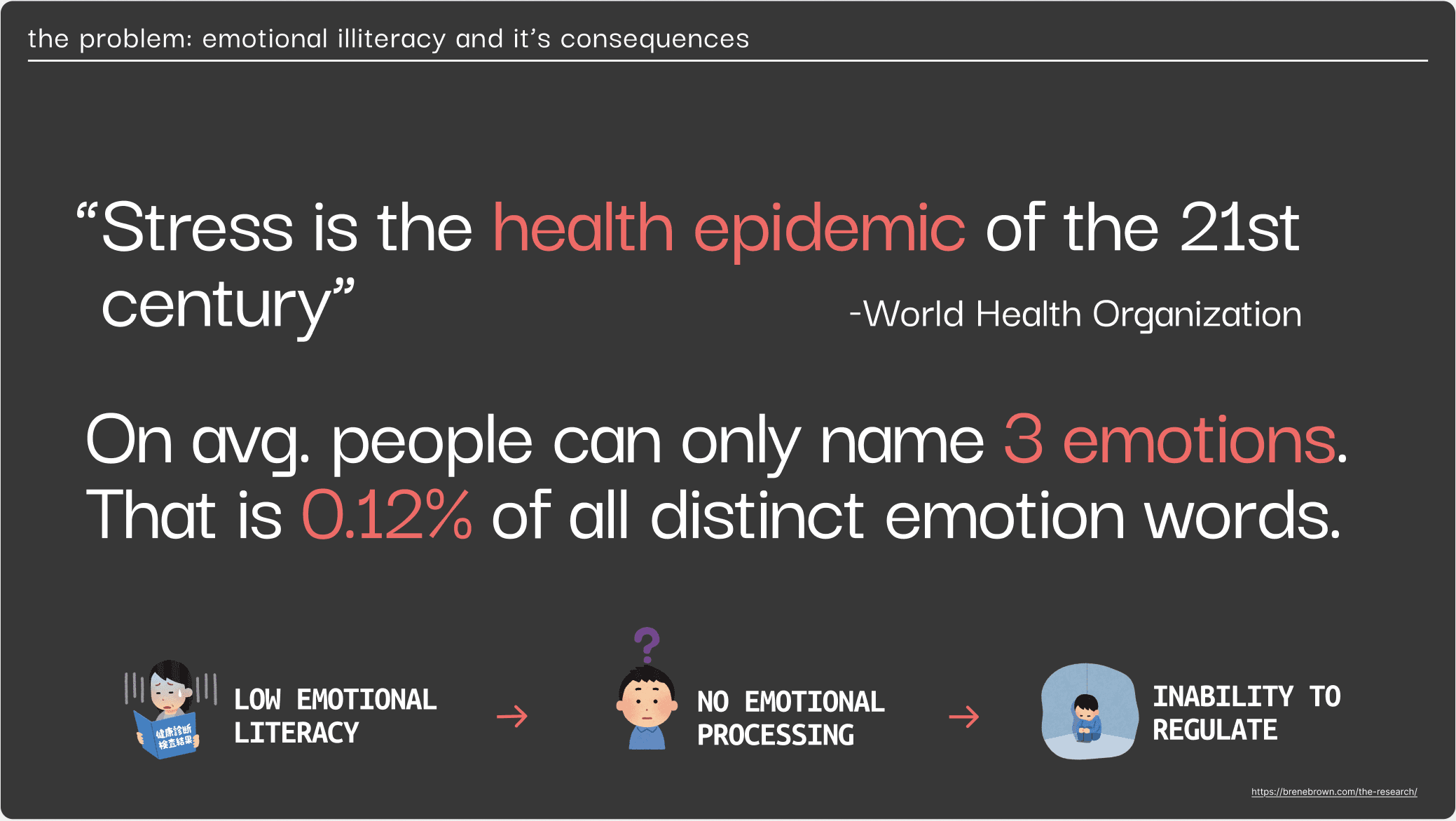
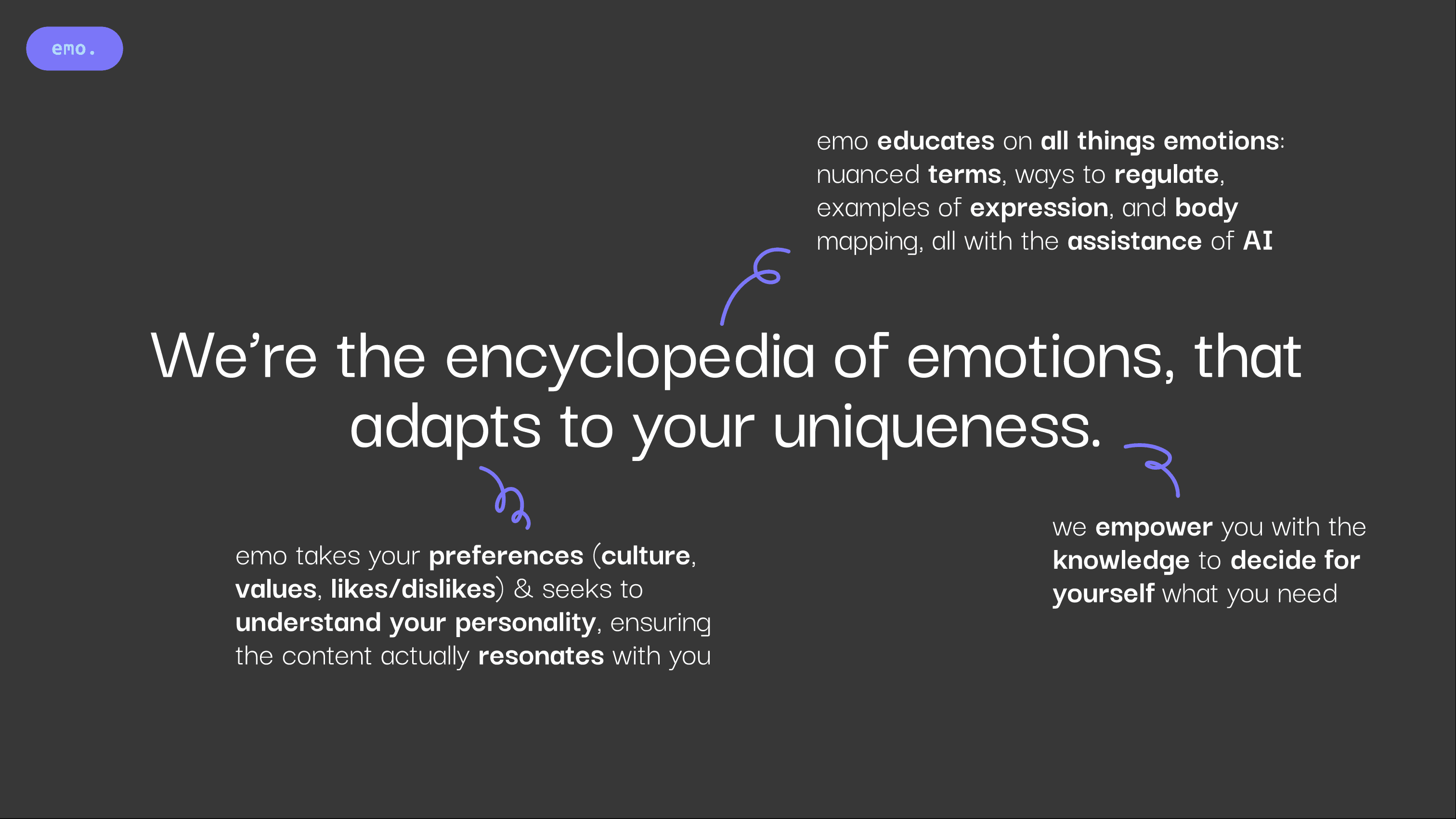
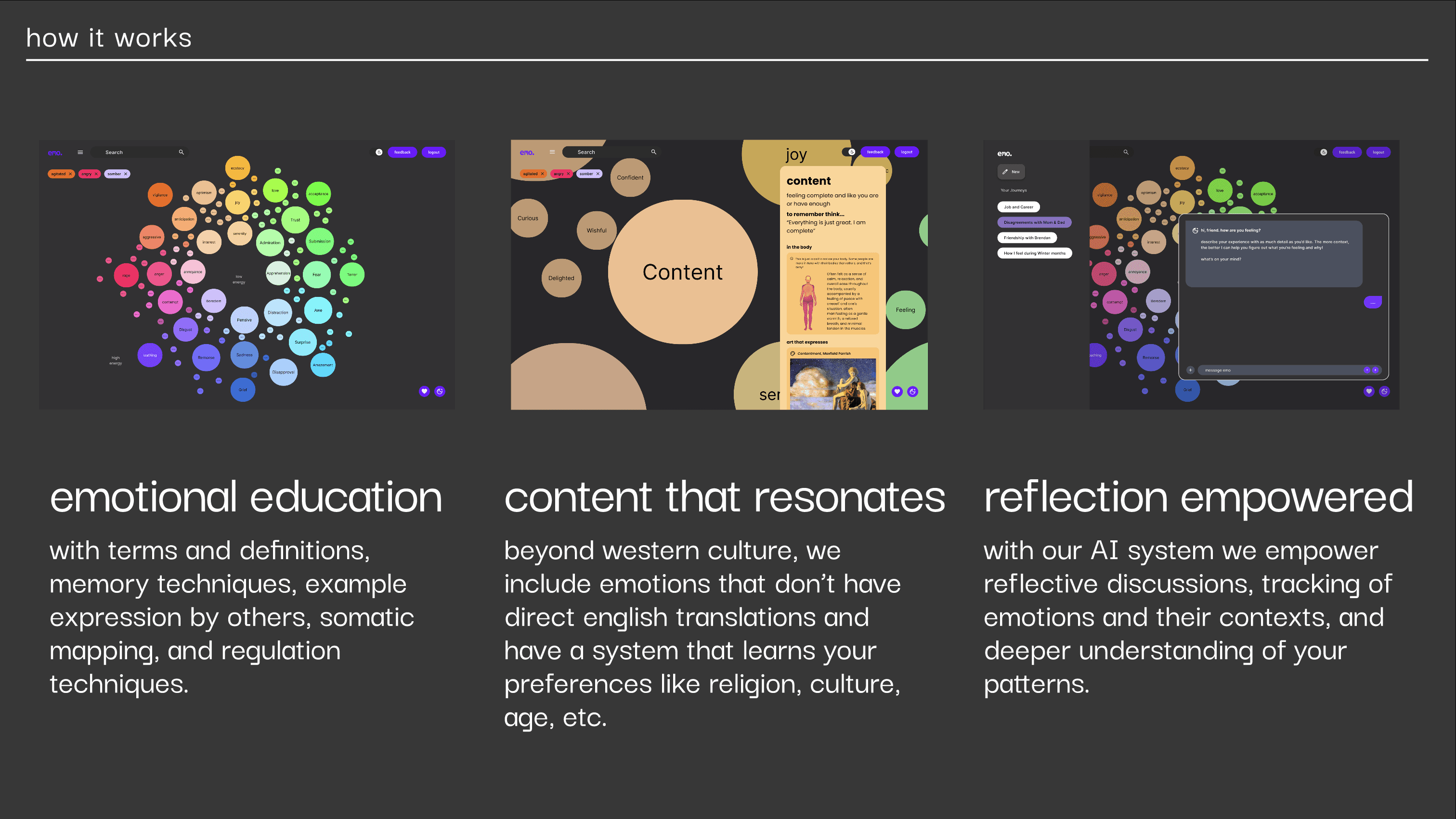
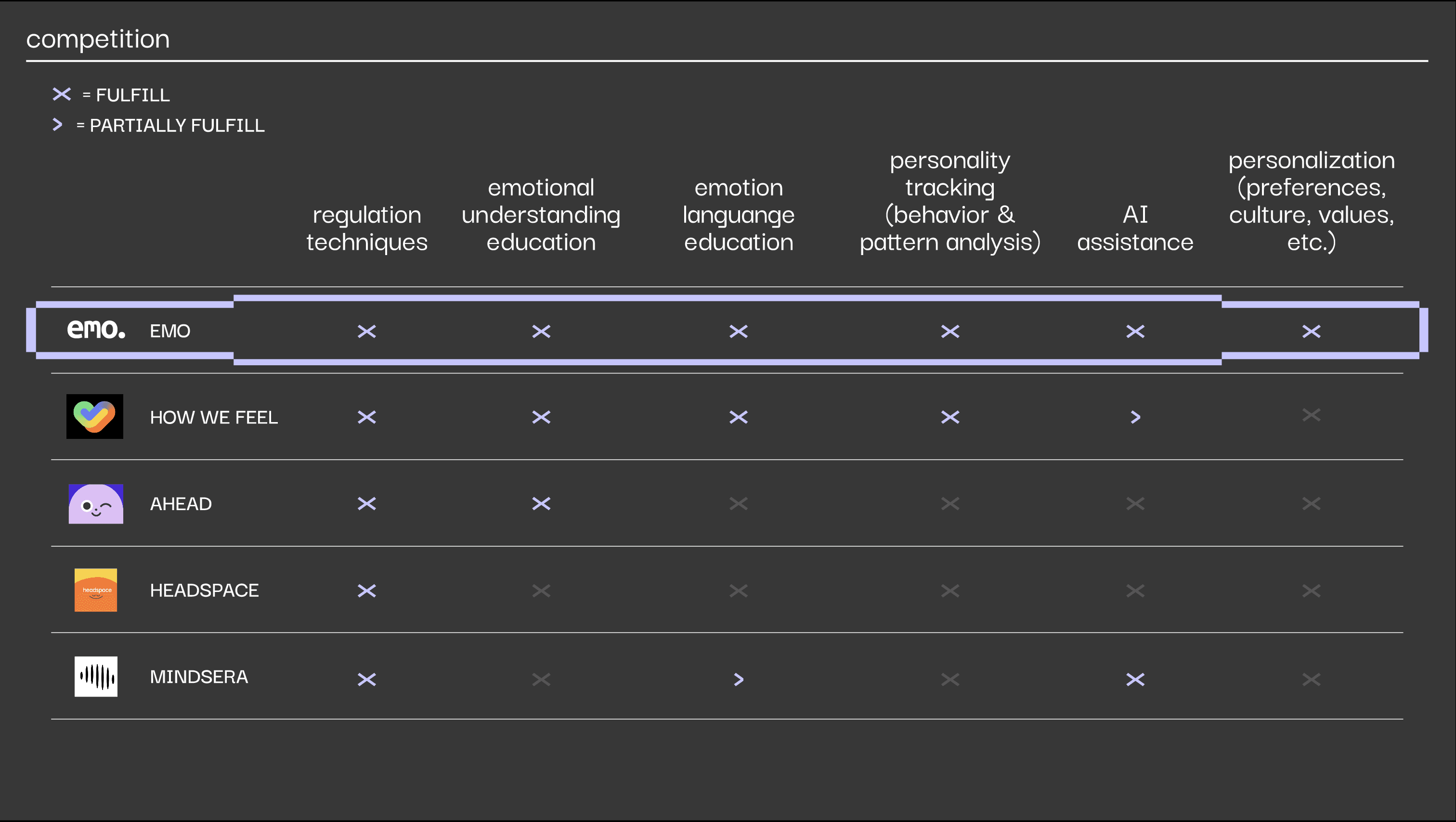
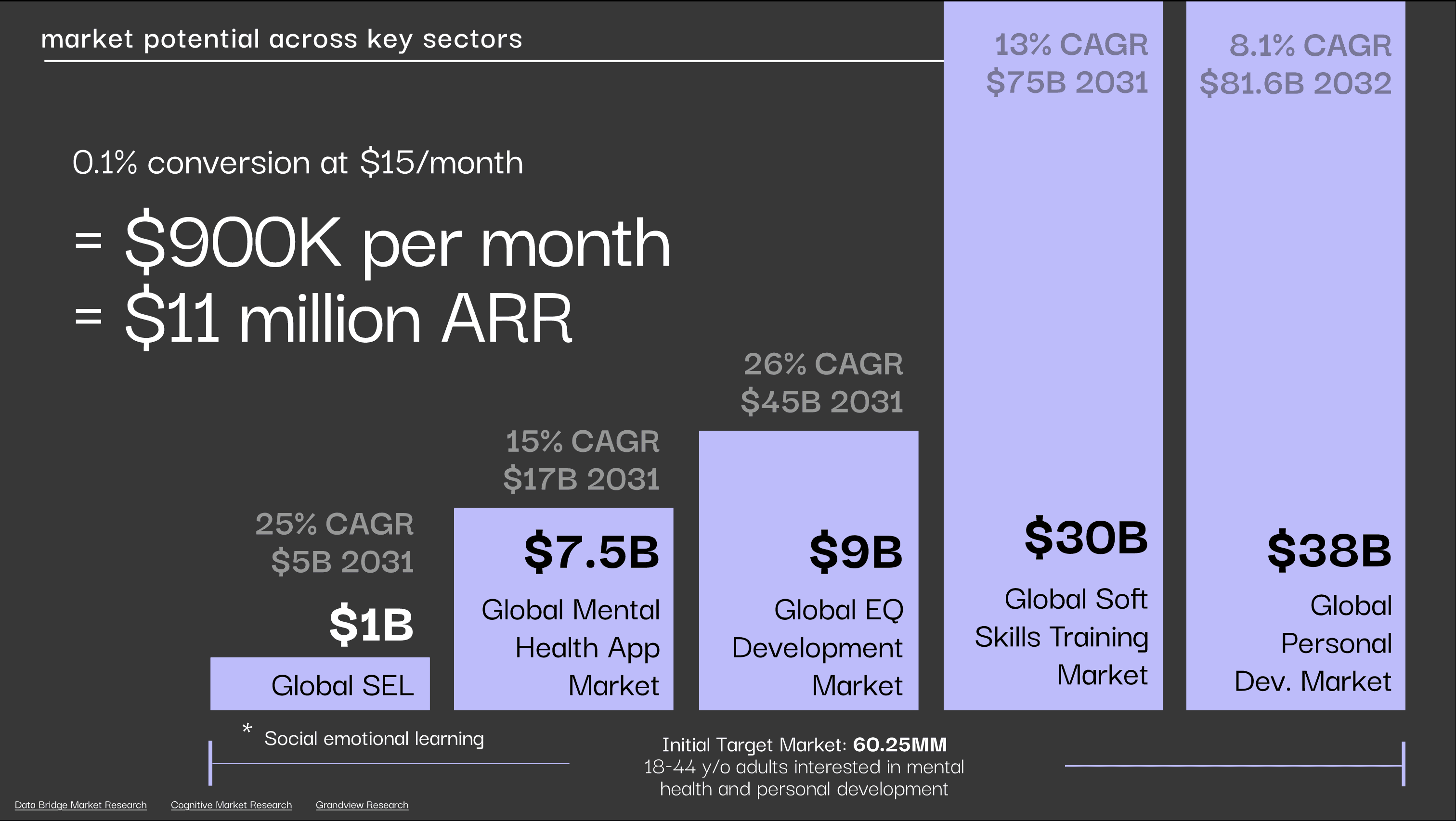
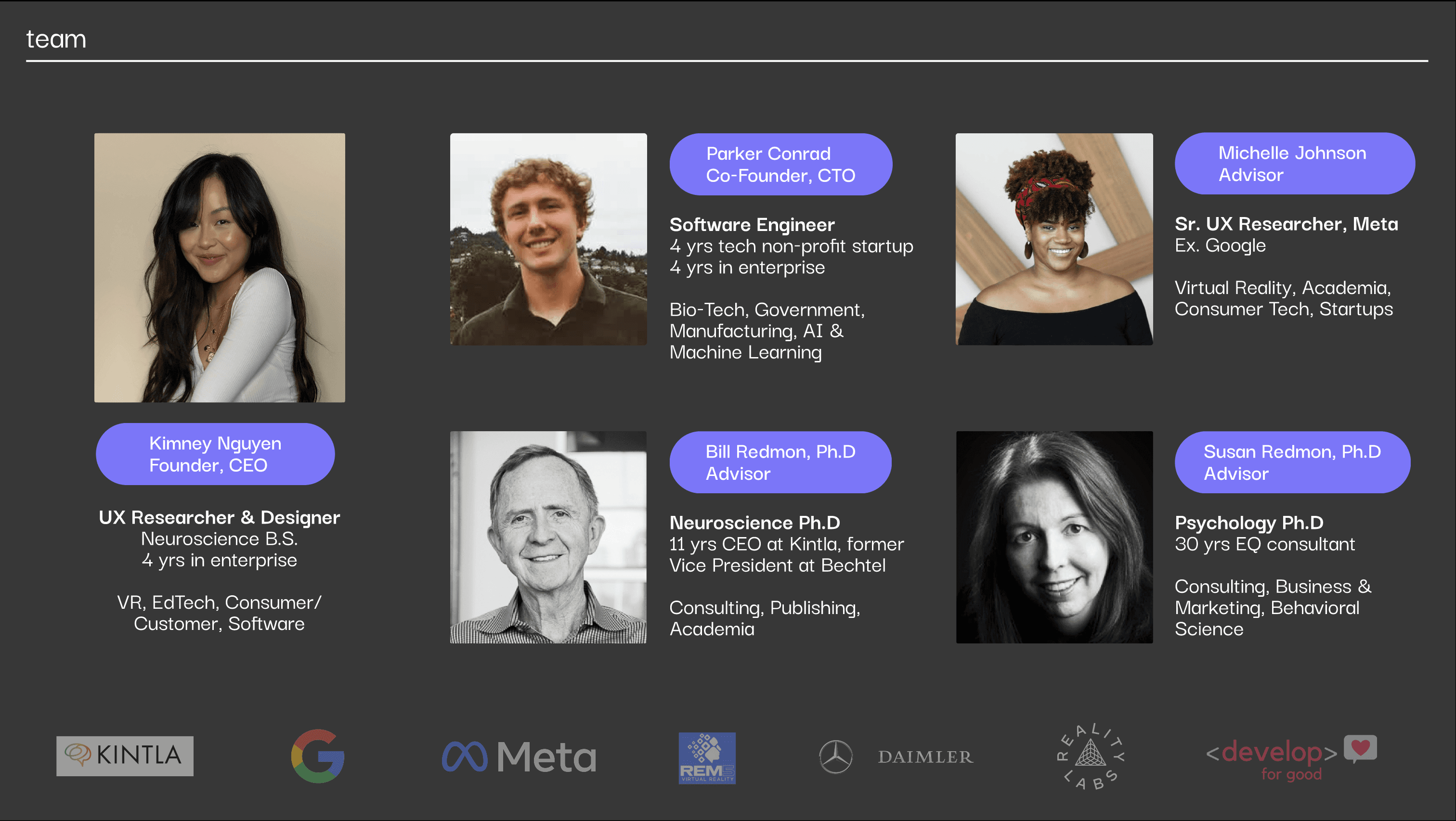
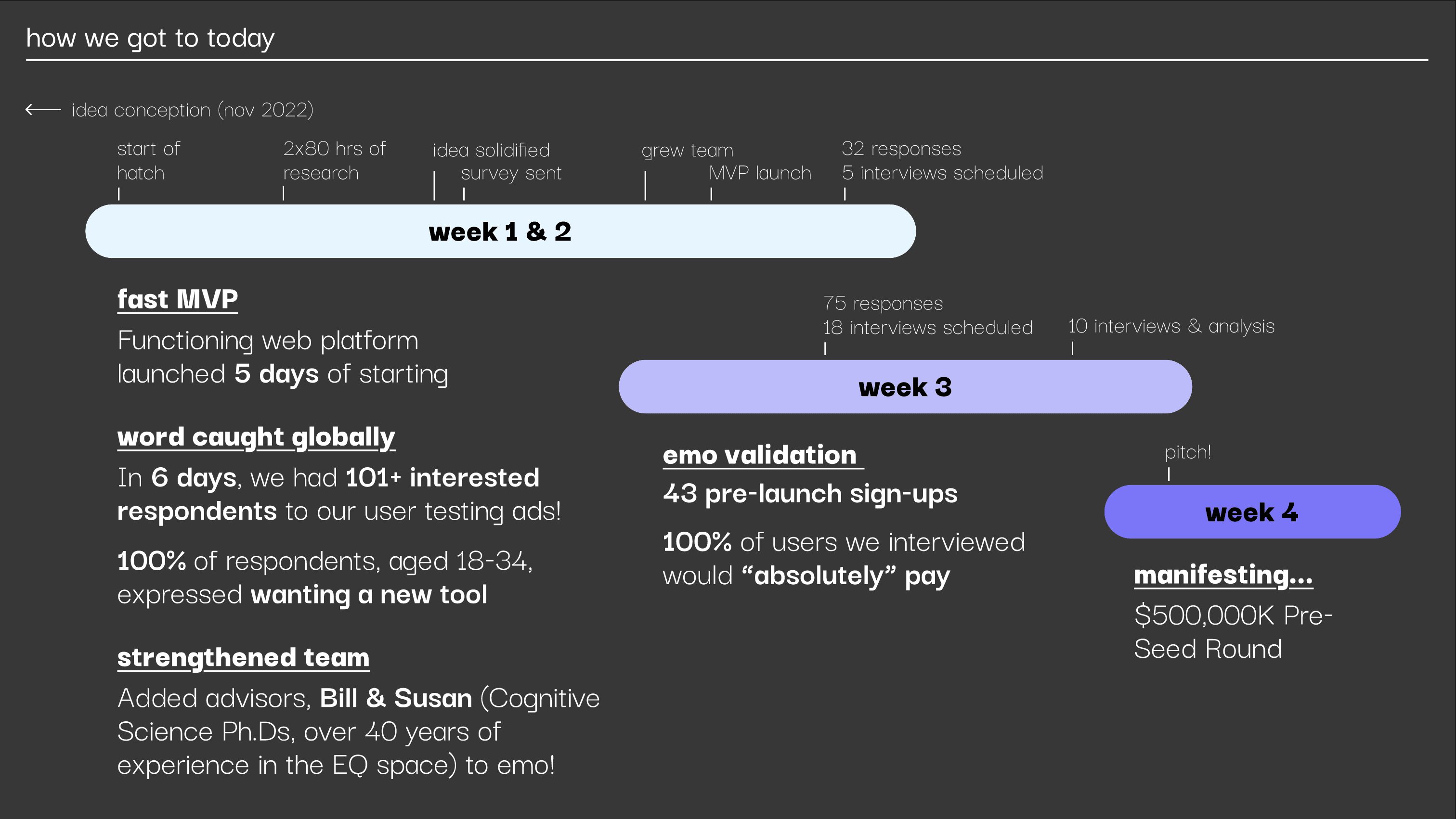
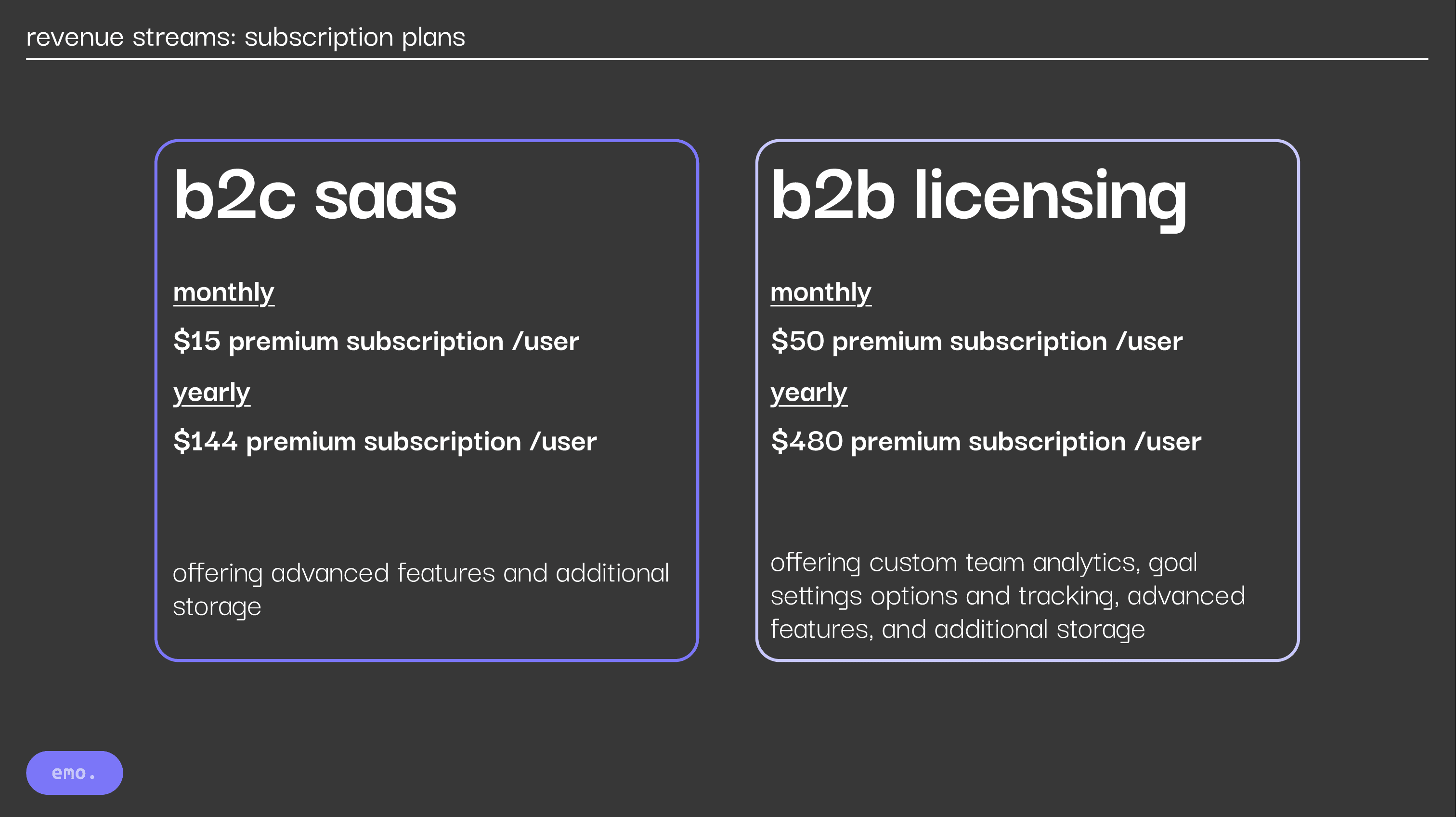
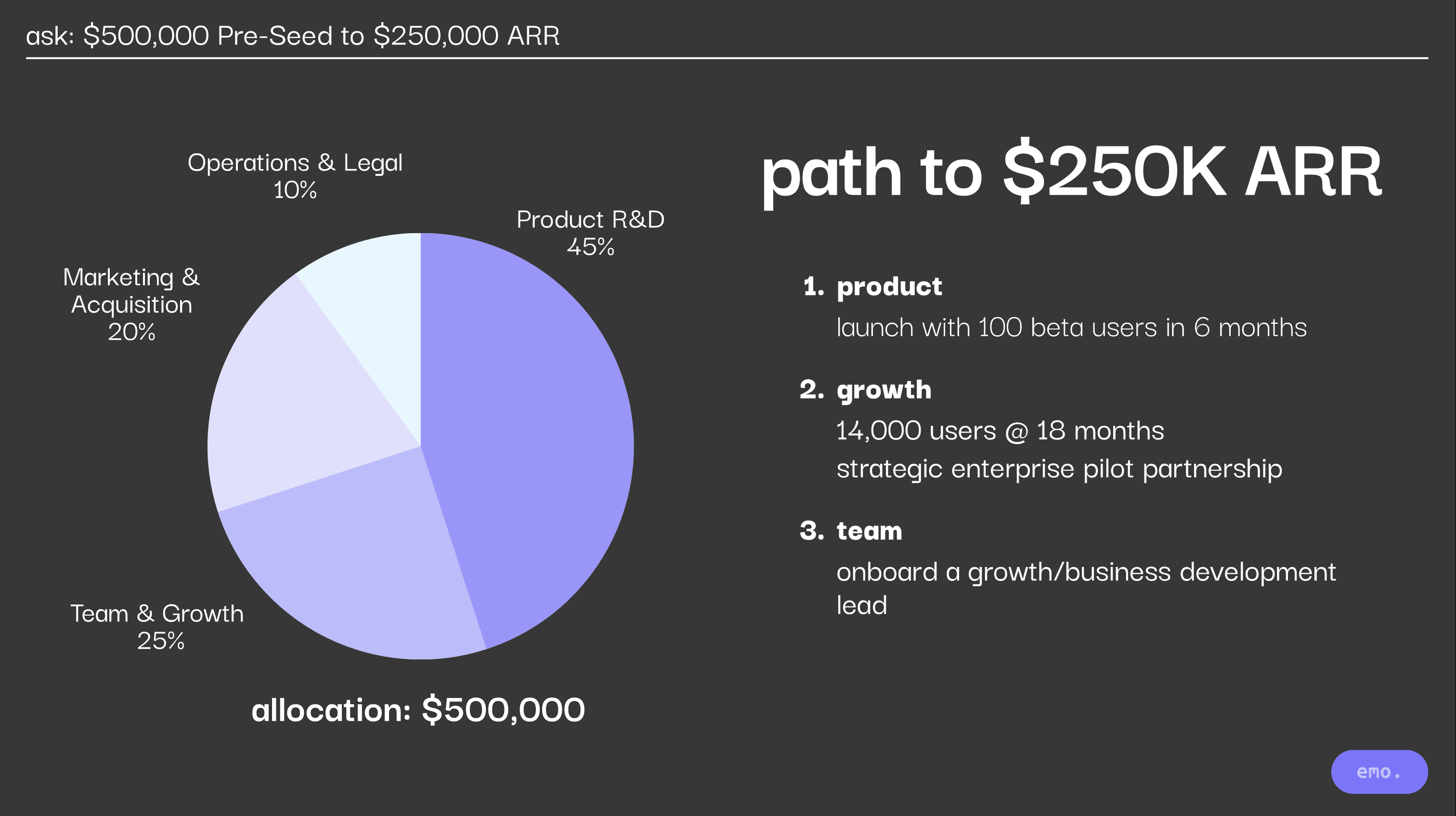
Emo pitch deck. Read top left to bottom right.
Strategy
Outline of project phases
1
Defining The Problem Space: Idea conversations, competitor research, affective science research
2
Strategy and Vision Definition: Product requirements, establishing the idea
3
Idea Validation: User interviews and surveys
4
Proof of Concept: Figma prototype and web development
5
PoC Testing: User feedback with demos
6
Investor Pitch: Pitch deck and presentations (Foundess program specific)
7
Research Analysis: Persona development, Jobs-To-Be-Done, MVP next steps, reflections, learnings
Discovery Research
Defining The Problem Space
As a deliverable to one of my advisors, Michelle Johnson, I conducted literature research into the area of emotional intelligence (EQ), EQ education, and our current EQ levels.
Compelling insights that validated a problem space:
Brené Brown’s research (published in 2021) revealed that, on average, a person can only name three emotions - happy, sad, angry.
Marc Brackett, Founding Director of Yale's Center for Emotional Intelligence, continuously works to highlight the ways emotional neglect manifests in our behavior, such as emotional eating, rebellion, isolation, outlash, and others.
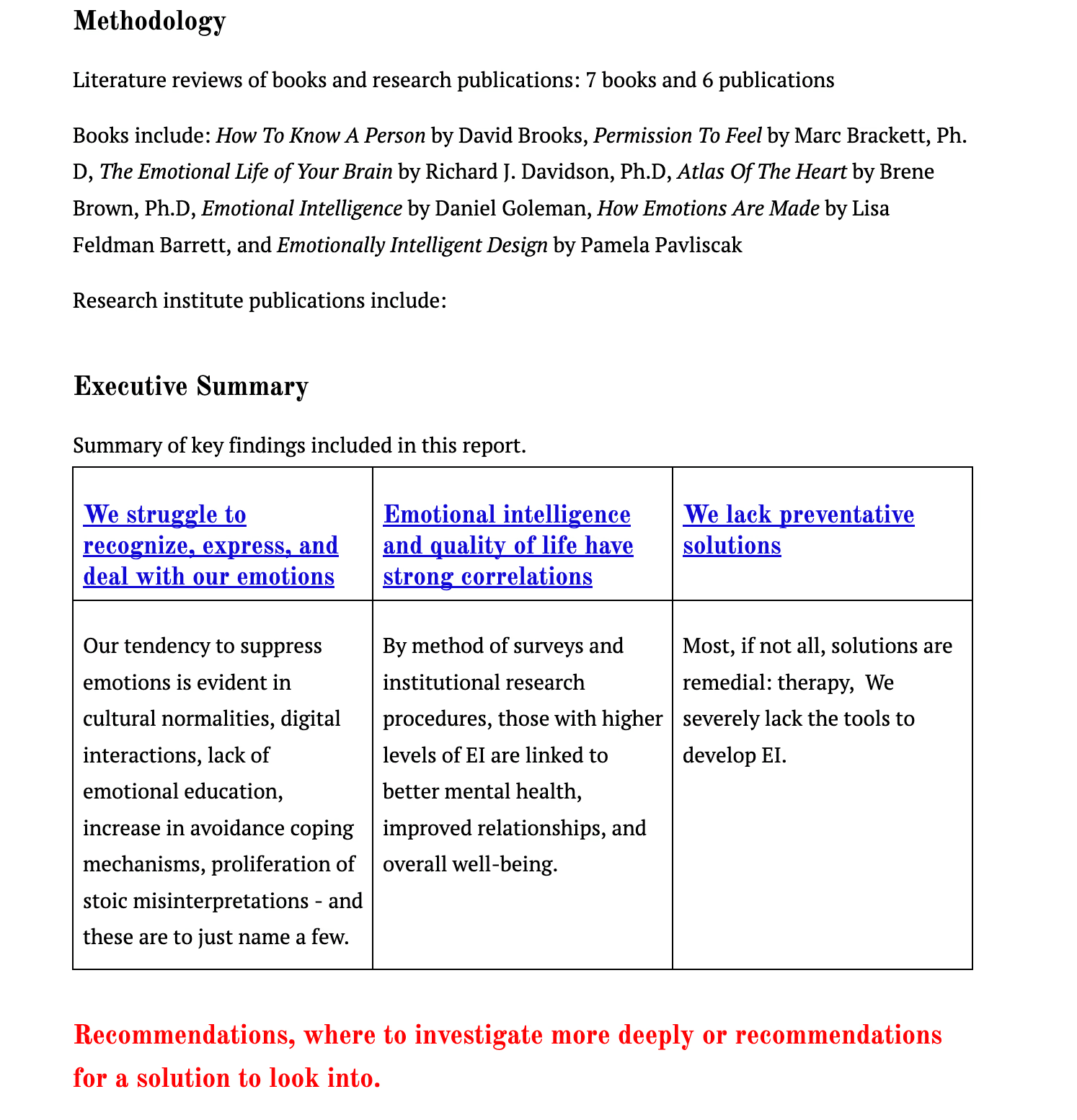
Research reported November 2024.
Ideation
Defined a Strategy and Vision
Two product development framework utilized:
Amazon’s PRFAQ framework
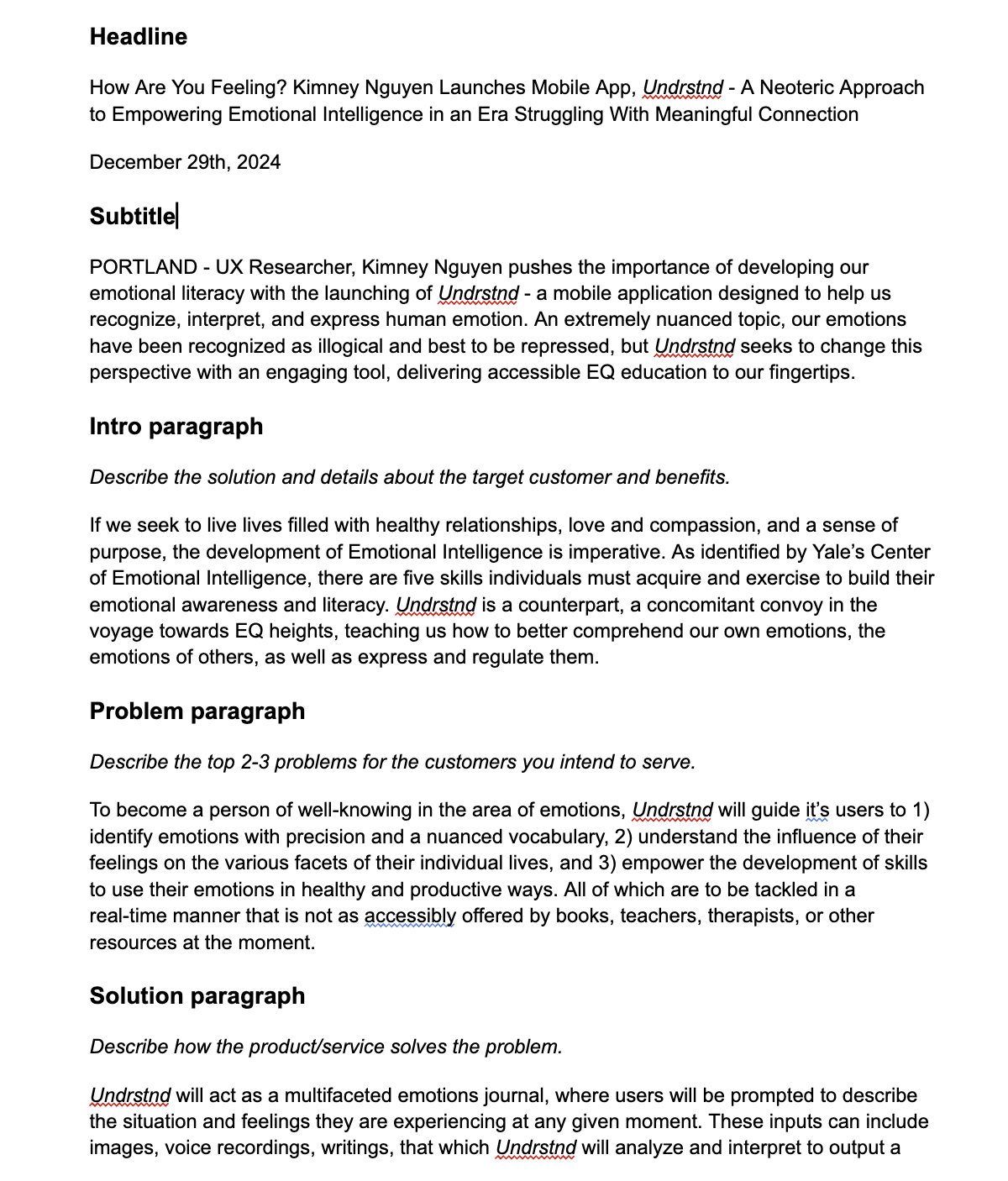
A press release for Emo’s launch, and anticipating internal and external questions to clarify the vision. Completed 2023.
Start-up accelerator lean canvas template
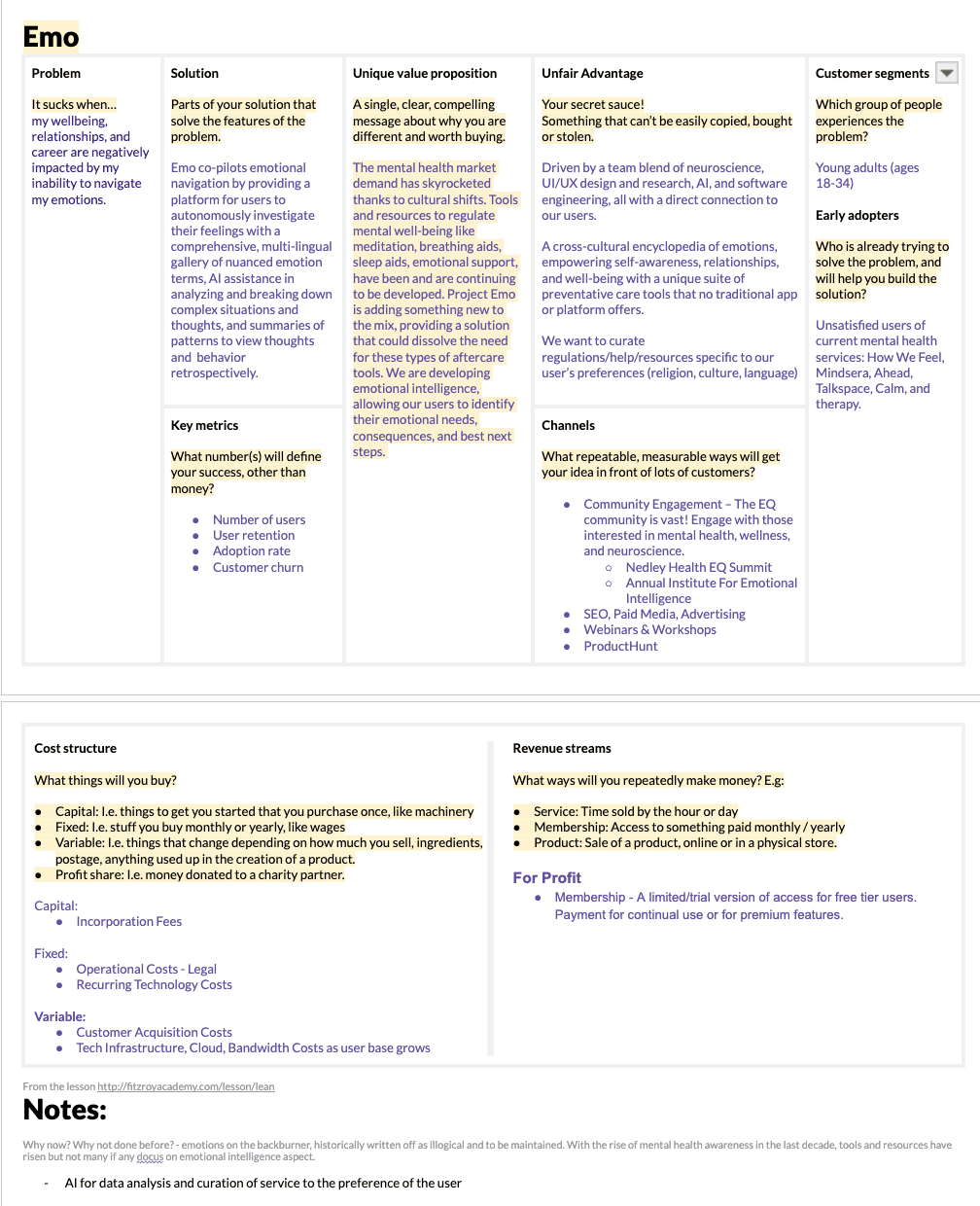
Foundess’ Lean Canvas template filled with Emo’s details. Completed 2025.
User Research | Surveys
To explore the perspective users' thoughts on a solution like Emo.
I chose a survey for scalability, product awareness, and test participant recruitment.
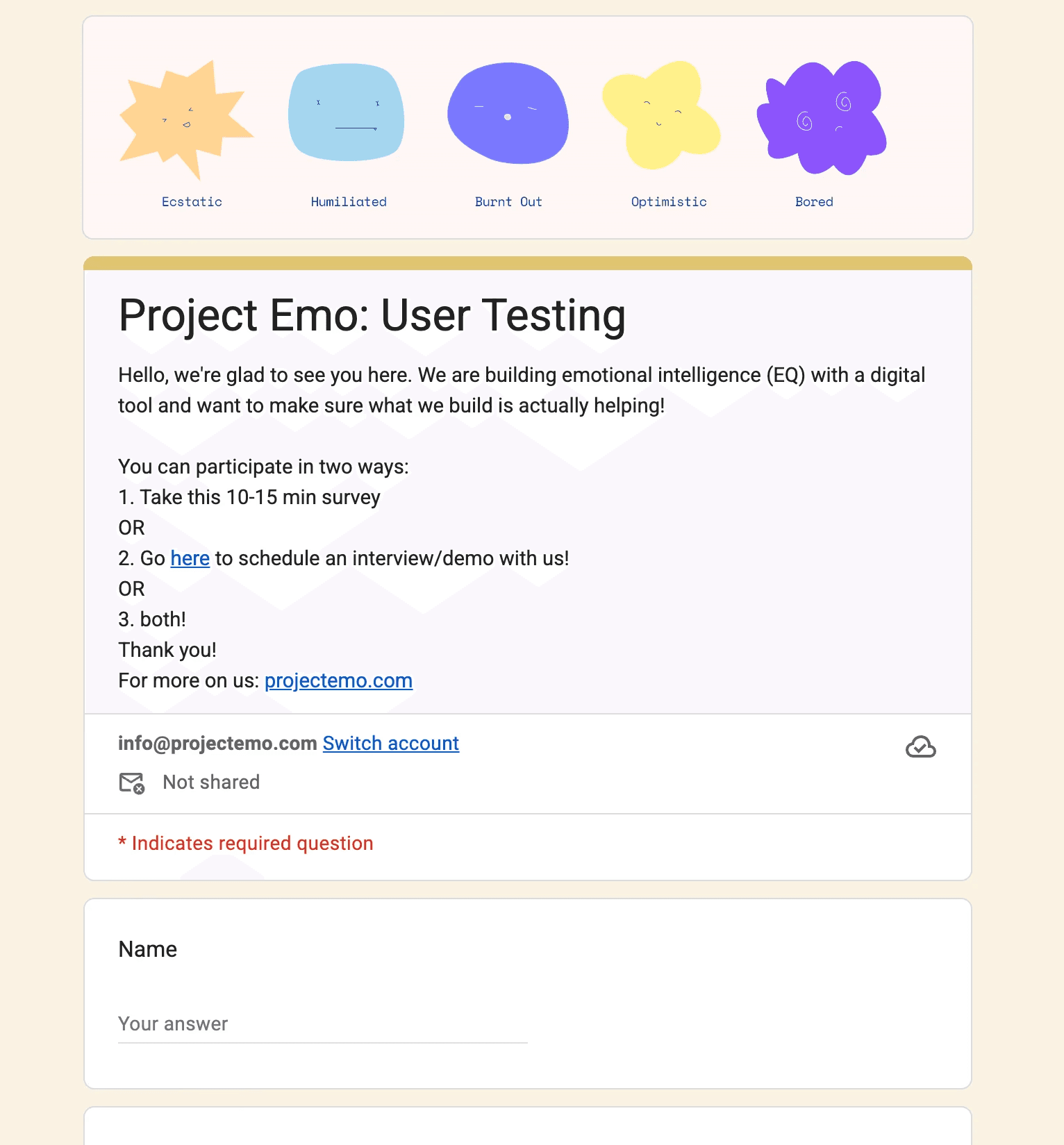
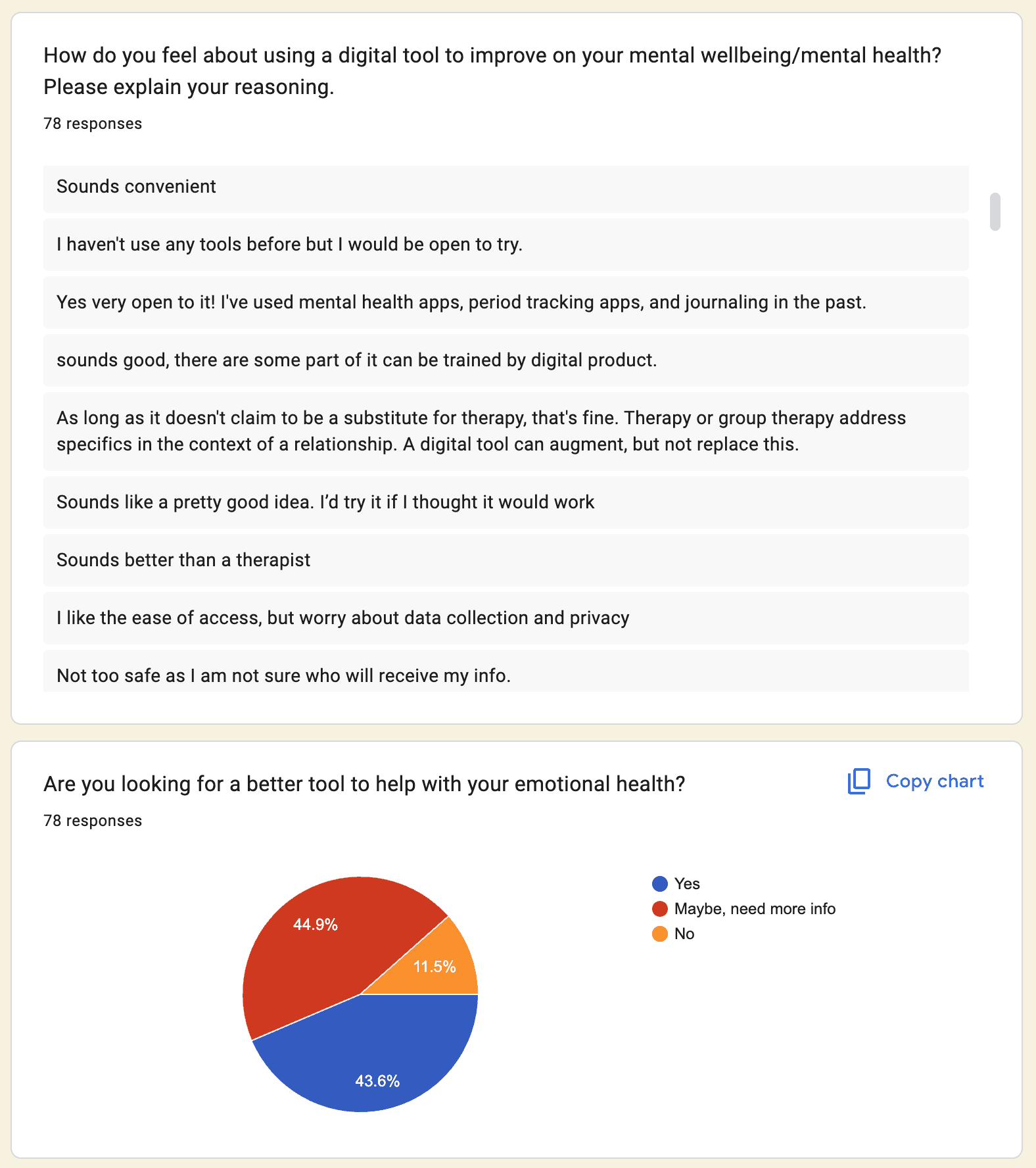
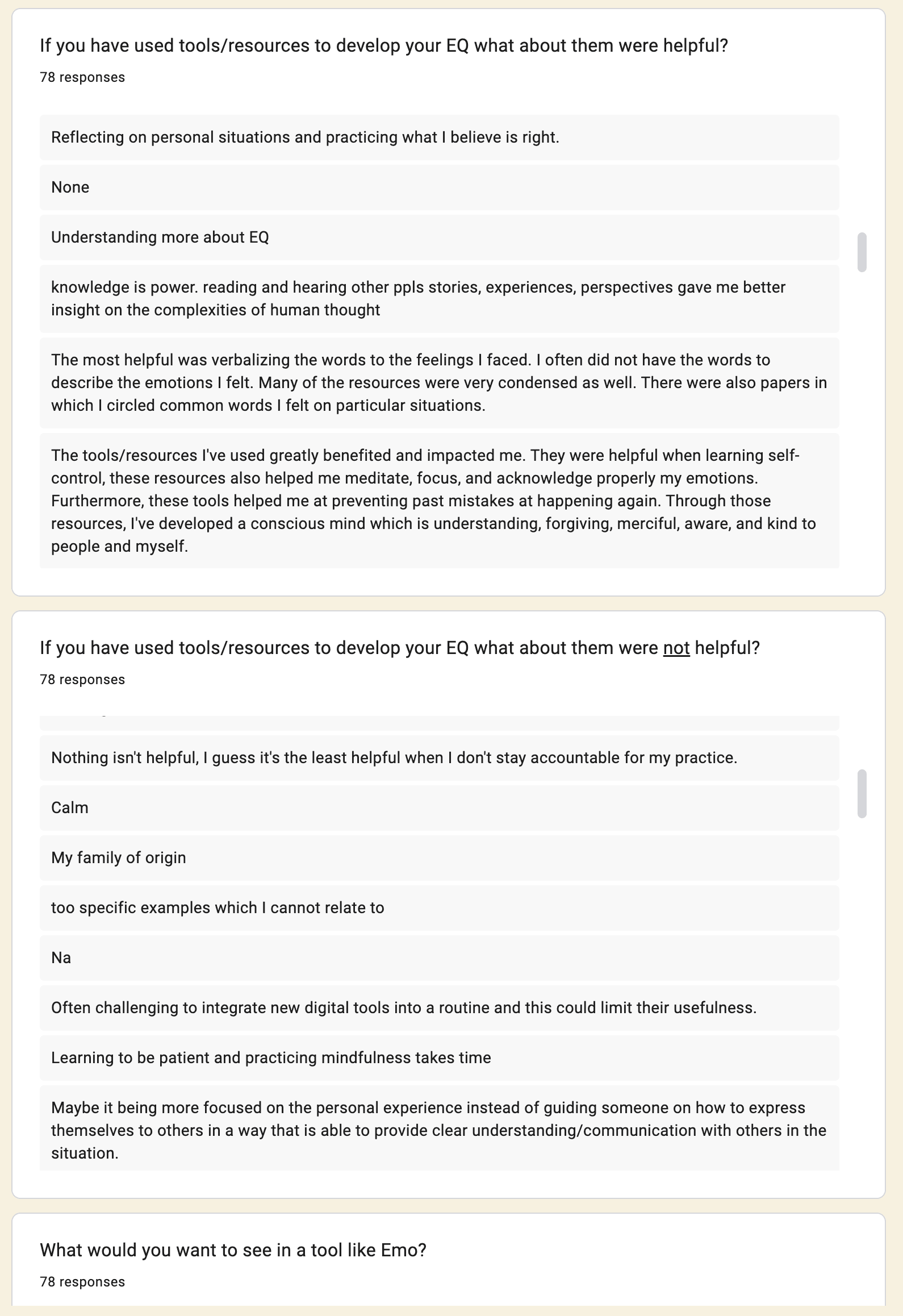
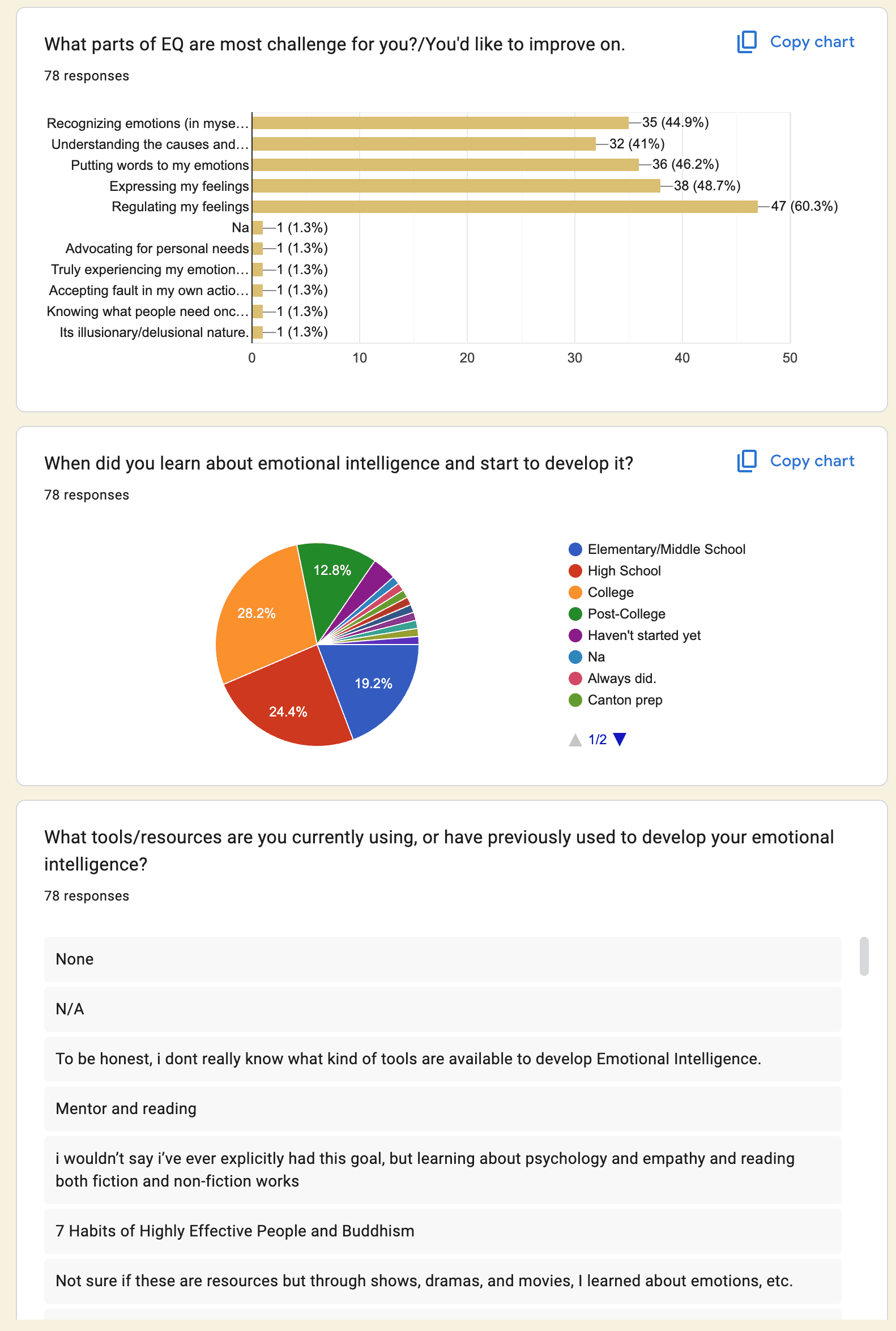
Preview of the survey form and results. Results from 78 responses in 5 days.
Results: Insights validated interest in Emo's idea, but participants had difficulty imagining what a helpful resource would look like. This led to the decision to create a POC instead of an MVP to get further user validation before building a fully functional product.
Being part of the accelerator, we had a 3 week deadline.
POC | Figma + Web
Proof Of Concept
Derived from research insights, POC features included:
Emotion term gallery with definitions
Deep dive definitions with examples of the emotion being expressed through art, music, and writing
Body mapping to display common biological events
Chatbot to help users find an emotion through conversation and keep history
Mood board
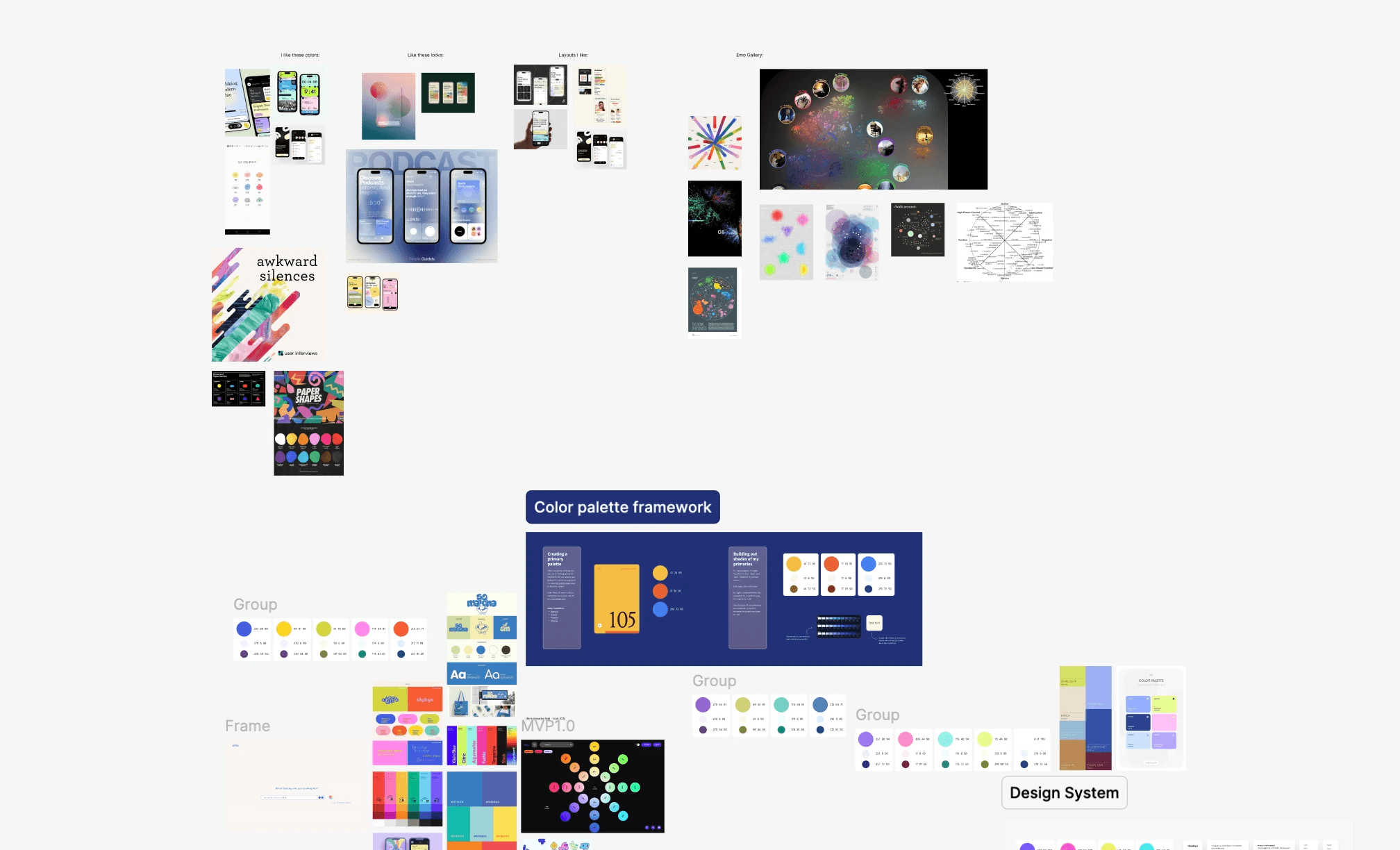
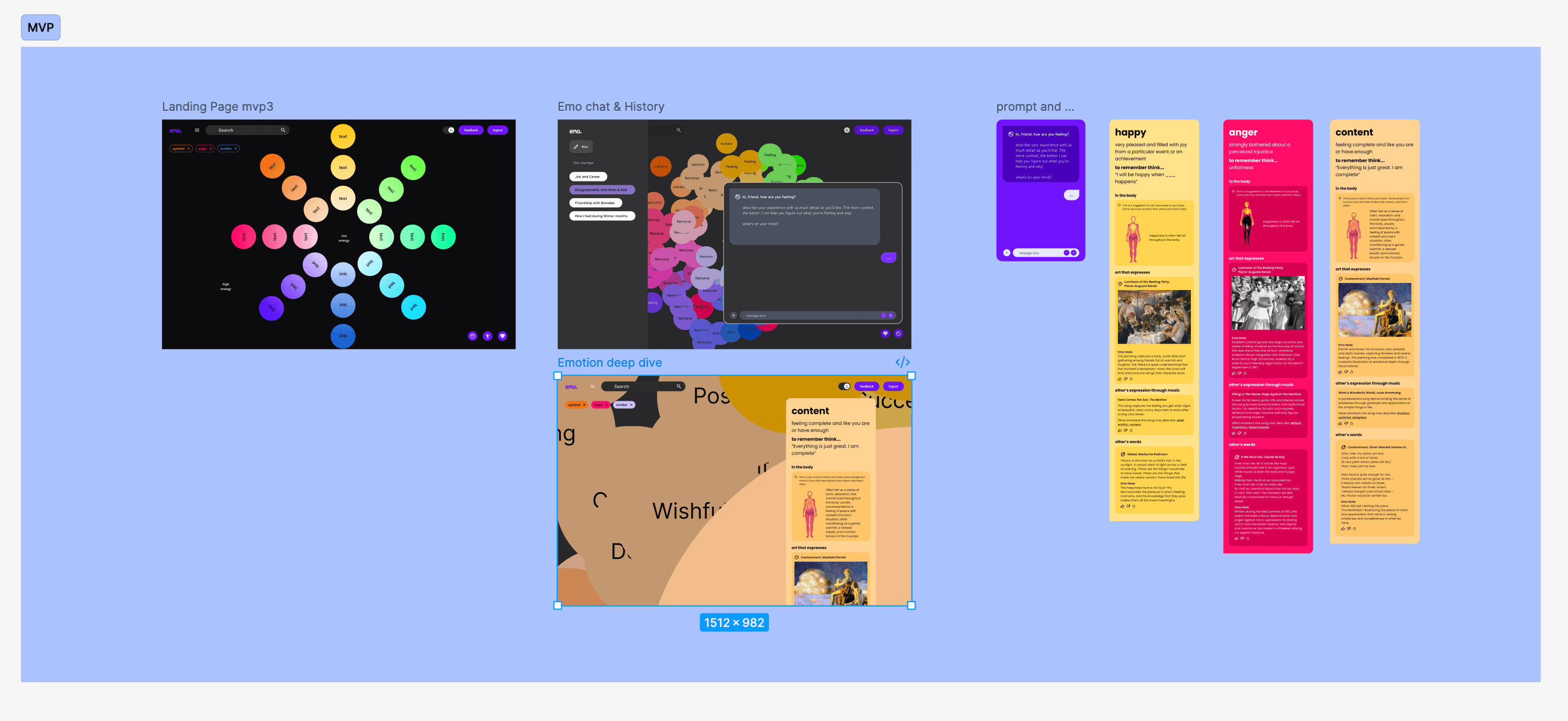
Design file in Figma that held concepts, wireframes, and prototypes for implementation.
User Feedback | Interviews
User interviews and Emo demo
The purpose of this session was to give users an idea of what a solution could look like and get their thoughts on its concept.
Method: An hour interview with a demo of Emo with users individually.
Participants: n=13, ages 19 to 40.
Emo Live Walkthrough
Research Analysis
Persona Development, Insight Coding, Jobs-To-Be-Done
Insight Coding
Parsed interview transcripts for insights using Dovetail.
Imported insights and quotes into Airtable to organize and code into themes - first descriptive codes, then interpretive codes.
Also organized participants into early adopters and broke down their demographics and interests.
These fed into Persona and Jobs-To-Be-Done frameworks.
Persona Development
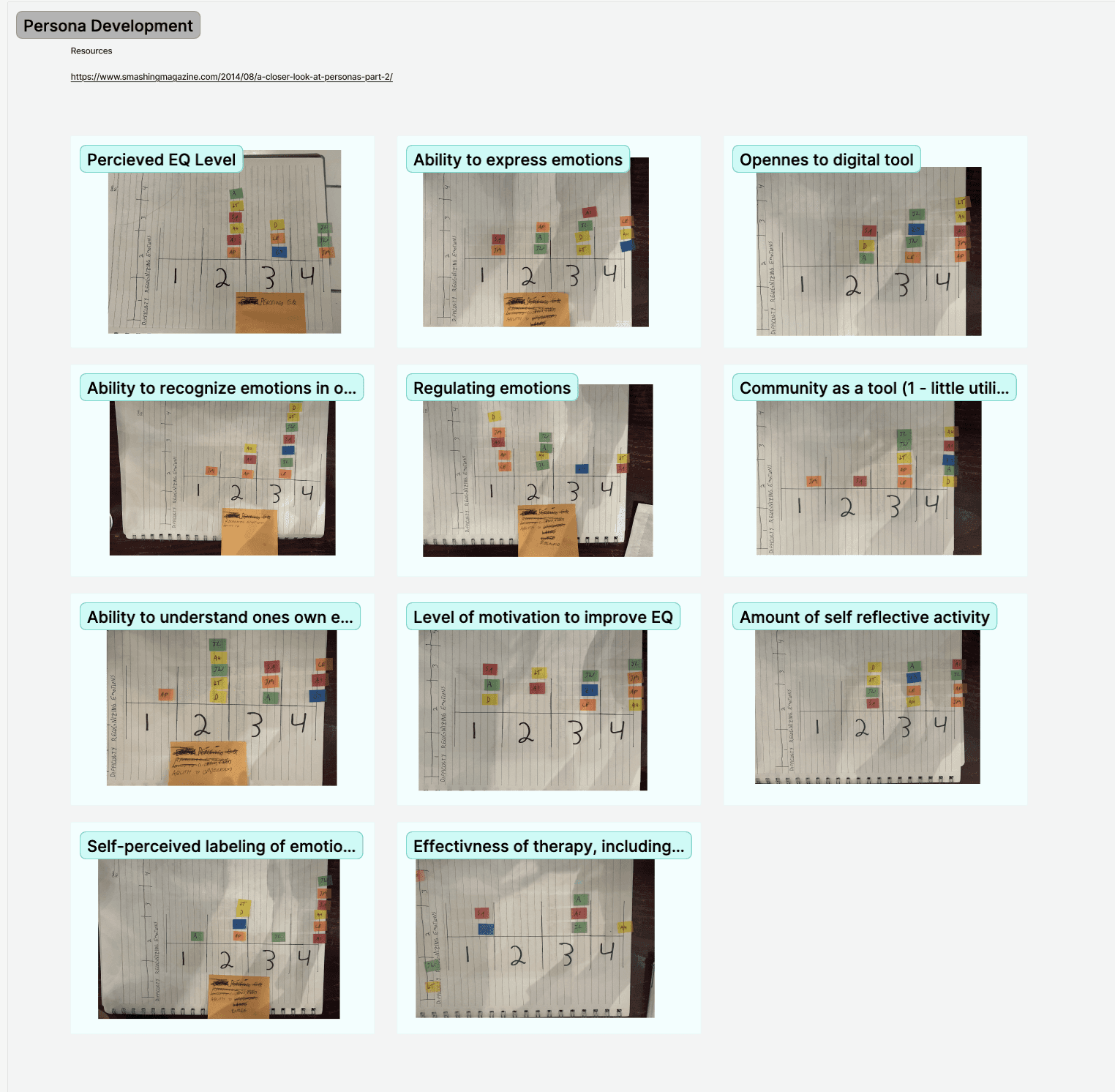
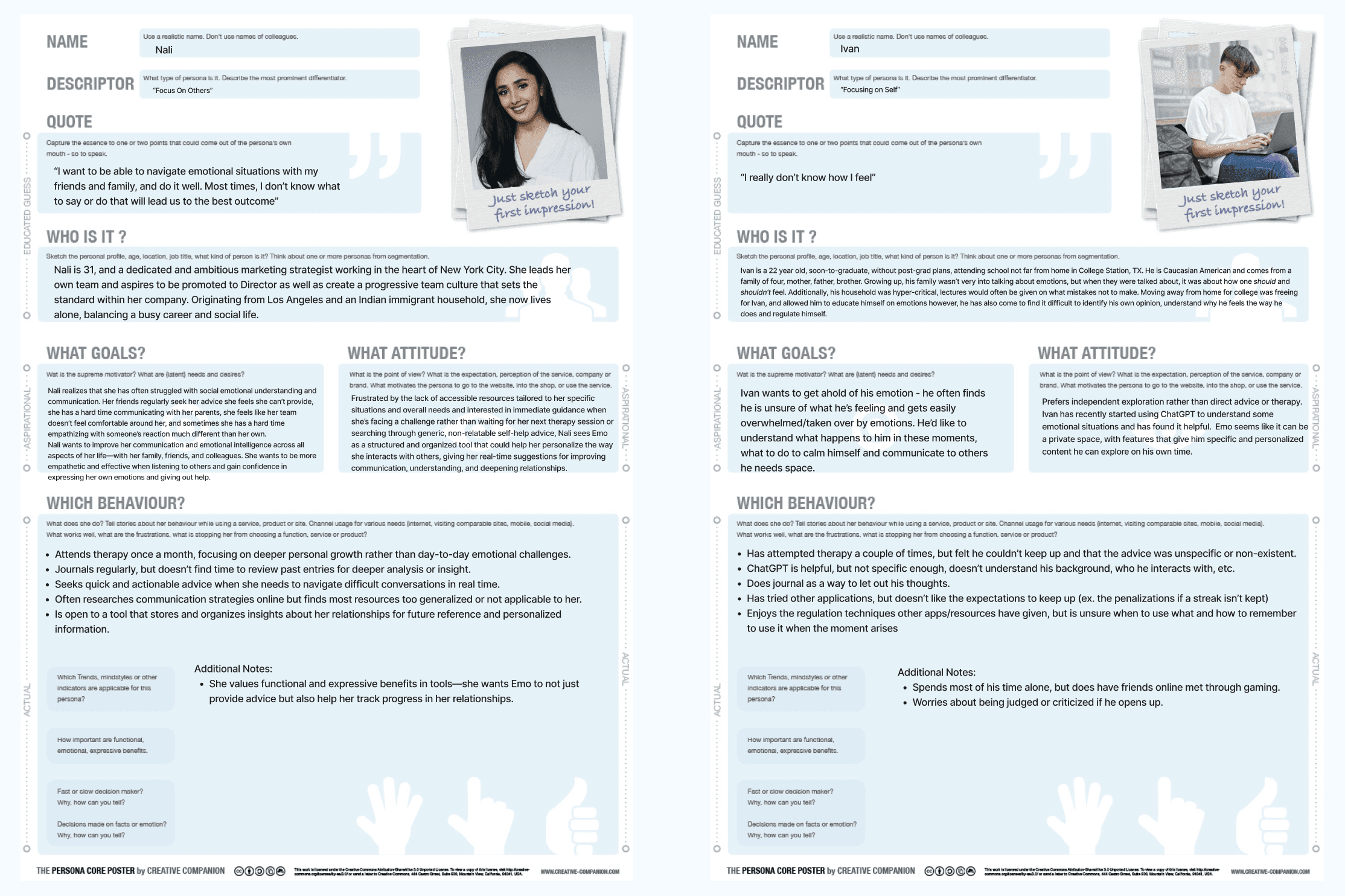
With demographics, user interests, descriptive codes and interpretive codes, my co-founder and I used a scoring approach to develop two personas. (See below).
Scoring characteristics identified the most common of the users we interviewed. From these, my co-founder and I set three bouts of 15 minute sessions to develop three personas independently.
We then compared and contrasted stories to develop a final set of personas.
Persona scoring
Independent drafts and integration
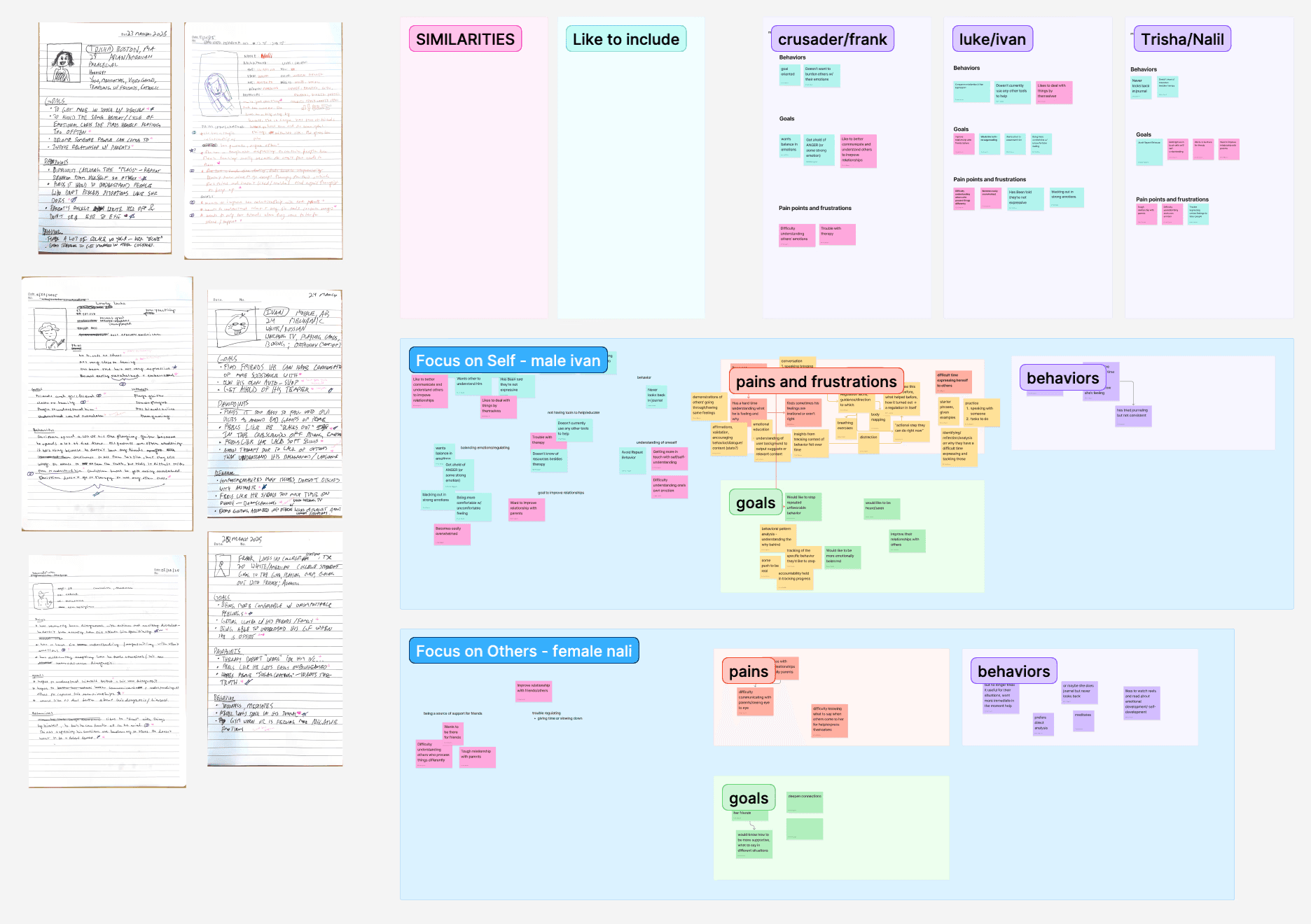
Final personas
Jobs-To-Be-Done
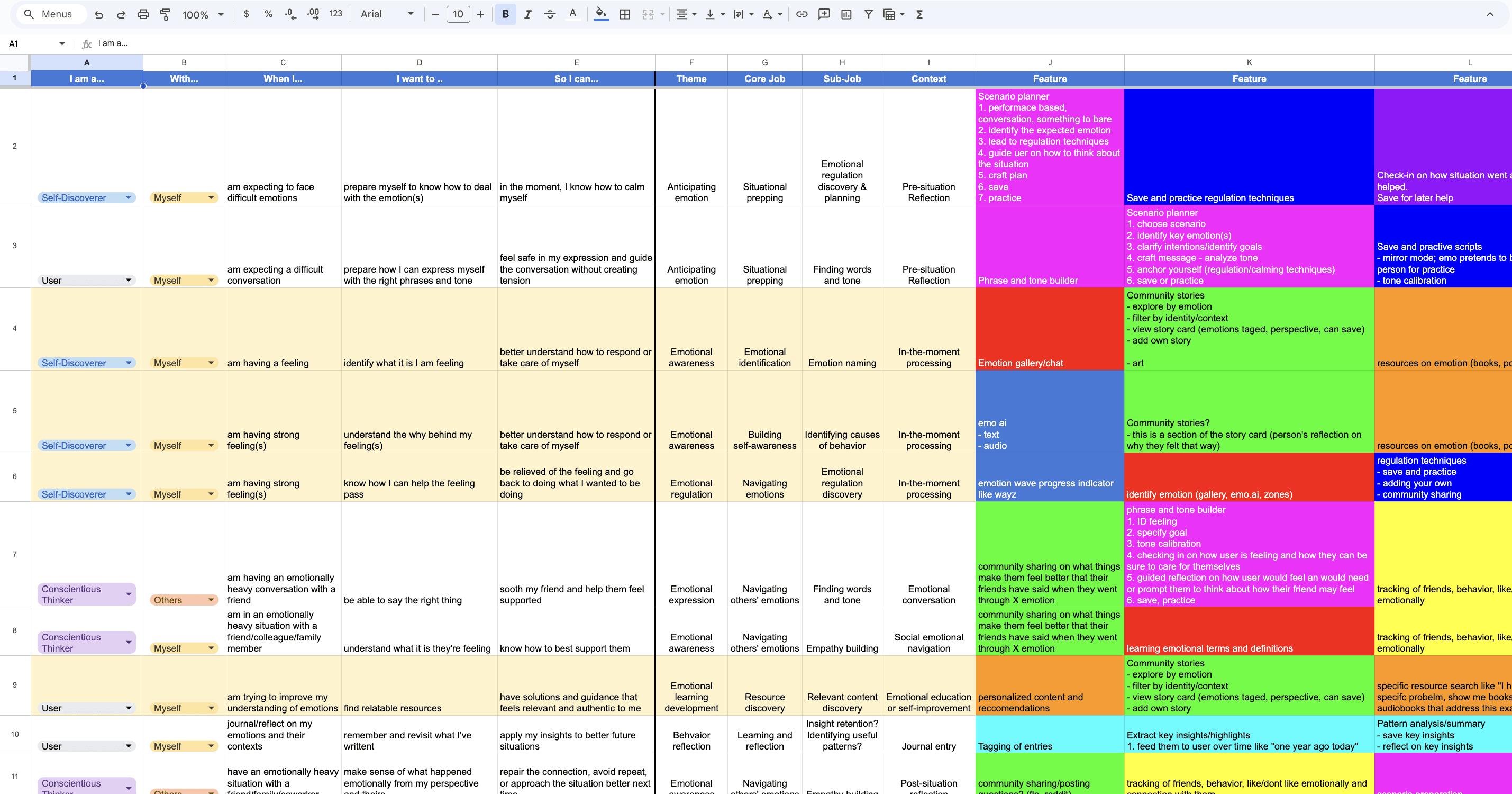
From my themes and codes, major categories of user goals presented.
I transferred these categories into an excel sheet and brainstormed various solutions for each job.
Then determined with my team what would be priority for the minimal viable product.
Jobs-To-Be-Done and MVP feature discovery
Minimal Viable Product
From the Jobs-to-be-done analysis, our minimal viable product would include:
Emo.gallery = terms and definitions
Emo.ai = chat agent
Investor Pitch
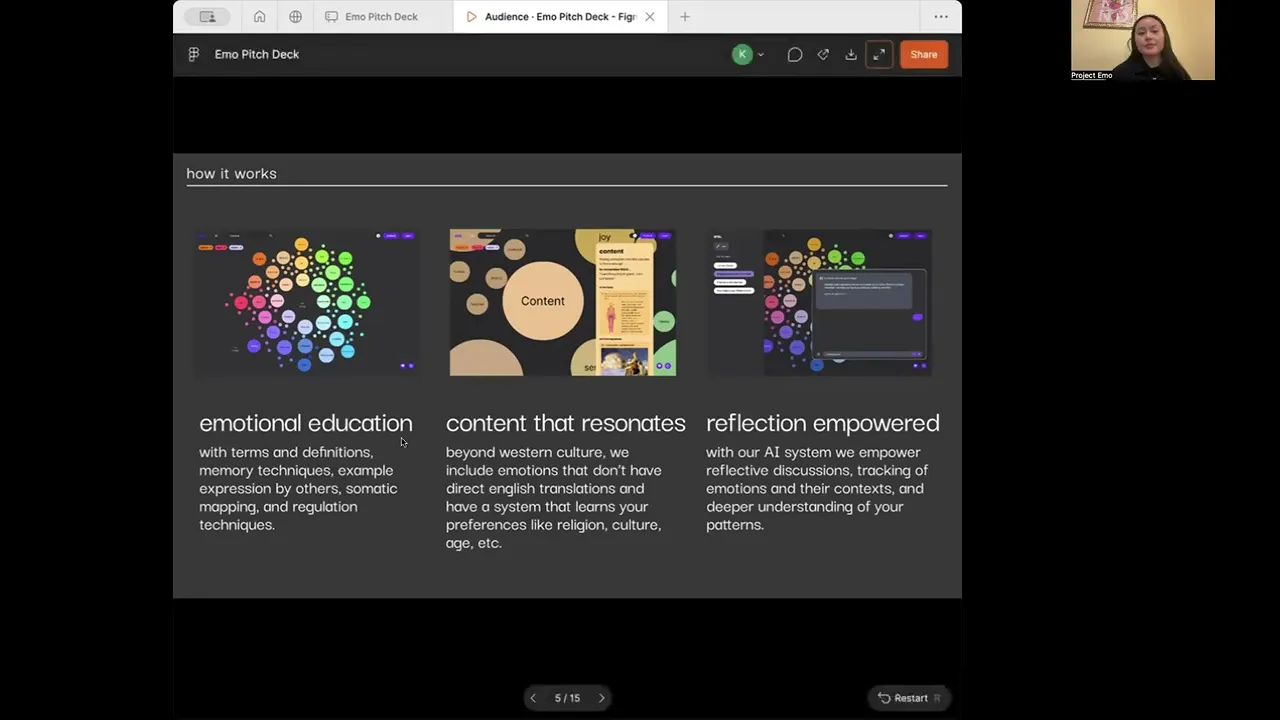
Foundess's program (1.5 months total) ended early March with a pitch feedback session with investors.
Outcomes
Over 100 users expressed interest in Emo via the survey and a launch notification sign up.
Feedback from other founders and investors, connected through the accelerator, validated strong potential in Emo.
I found the scoring approach to persona creation more insightful than personas I developed in the past. I plan to use it again in the future.
The jobs-to-be-done framework was useful in prioritizing MVP features
In just a month and a half we conducted user research through surveys and 15 interviews, built a splash page, a functional web-based POC, created personas, pitched to investors, and received a potential partnership proposal!
Learnings
The accelerator was so fast. But we learned a ton. How to take advantage of the MVP, how to utilize online platforms, friends, connections to recruit participants for feedback, the benefit in moving fast. Seeing our progress in such a short span of time - it was a success.
It’s a very large challenge I've tried to take on. A larger team with domain expertise would make a better product and accelerate product development.
The AI based functions would need re-evaluation, as the tech is still limited to function well and ethically in the ways that we had hoped.
In the early stages of building Emo, the app How We Feel launched. There were a mix of feelings seeing my idea realized by another. But I realized it didn’t mean my solution couldn’t offer something different, maybe a difference more useful to some. That is how Emo’s target evolved to focus on emotional awareness beyond Western cultures, where resources are less available.
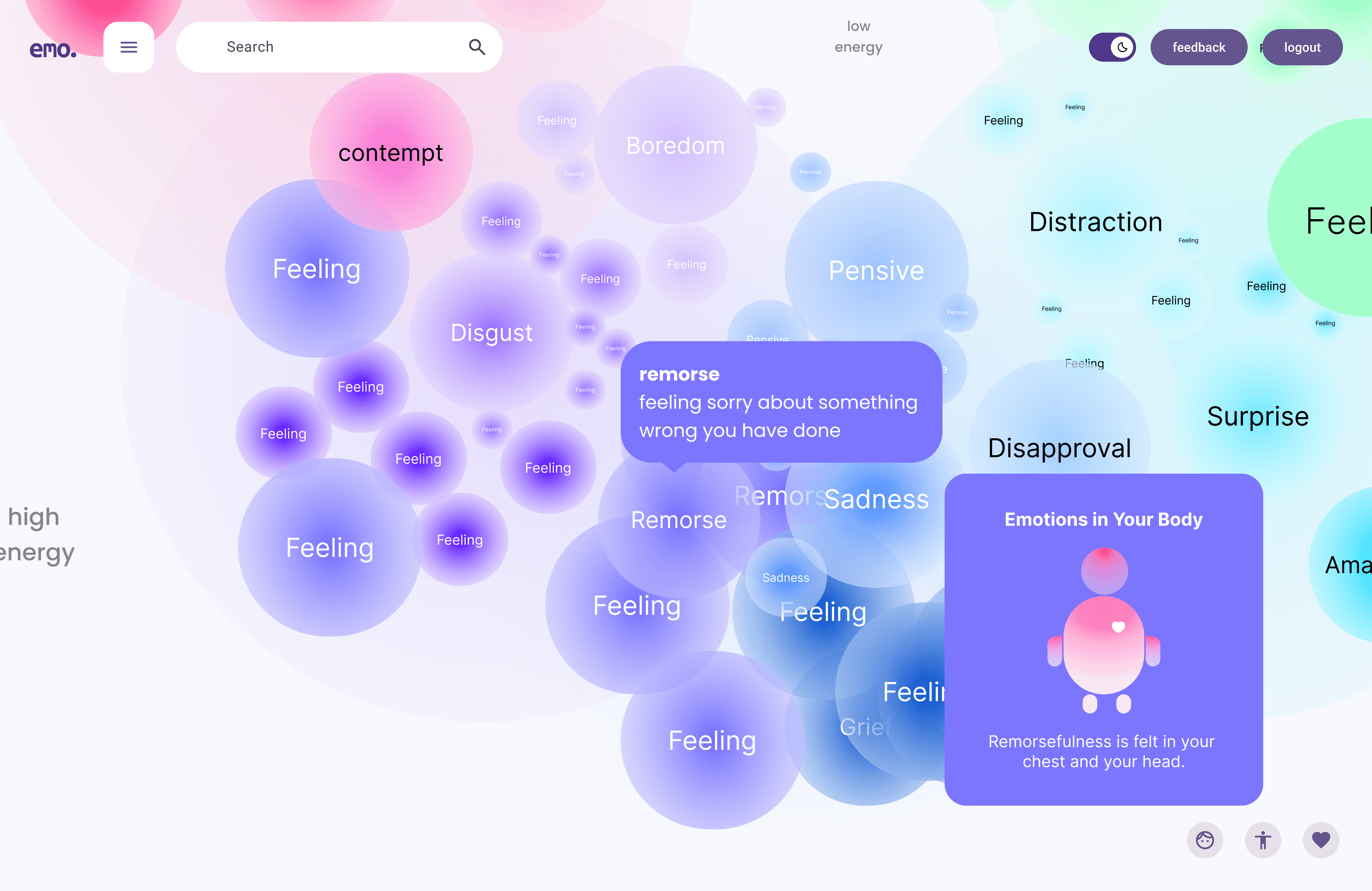
Most recent Emo design